The Comfortable Lies We Tell Ourselves About Muslims
As a resident of Bareilly, Uttar Pradesh, I have seen up close the social divisions between Hindu and Muslim communities. Later, when I lived in Ahmedabad, this division appeared even more pronounced. It felt structured, like two parallel systems running in the same city. These experiences pushed me to reflect on why such divides exist. More importantly, how certain perceptions take root.
I want to be honest about my own background. Most of my interactions in life have been with Hindus. Not because of Islamophobia, but because of representation. In school, Muslims made up barely 1–2% of students. In college, that number dropped to fractions of a percent. This lack of proximity matters, and I’ll return to it later.
Opinions definitely exist.
Once, during a casual office conversation, someone said, “You can’t fully trust them.”No one asked, “Who exactly are they?” Everyone just understood. This isn’t a one-off experience. You hear versions of this everywhere: drawing rooms, elevators, society meetings, train journeys. Not from uninformed people, but from those who have done well in life. And the claims are strangely consistent:
- They’re growing so fast they’ll replace Hindus.
- They don’t contribute to the nation, just take government benefits.
- Aggressive by nature, with poor civic sense.
- More loyal to religion than the country.
- Silently support terrorism and extremist ideologies.
- All Muslim-majority areas are unsafe, crime-prone, and lawless.
- They refuse to modernize or integrate into mainstream society.
- They receive appeasement from political parties for the sake of politics.
- Vote as a single religious bloc and cannot think beyond religion.
At some point, I began asking myself: Why do people believe these things? The people I am referring to are not illiterate, brainwashed, or deprived of resources. They are living prosperous lives, hold prestigious positions, and yet carry these perceptions. That contradiction is what makes this… worth pausing over.
A small observation before we go further. If a friend is late three times, we say: he’s irresponsible. If we’re late three times, we say: traffic was bad. Same behaviour, but our perception justifies a different explanation. Now replace “friend” with “community” and you see the psychological pattern.
Before getting into the psychology, it helps to look at what the data actually says.
1. They’ll replace us
Historical decadal growth data from national census:
| Period | Hindus | Muslims |
|---|---|---|
| 1951–61 | 20.7 | 32.7 |
| 1961–71 | 23.7 | 30.9 |
| 1971–81 | 24.0 | 30.7 |
| 1981–91 | 22.7 | 32.9 |
| 1991–01 | 19.9 | 29.4 |
| 2001–11 | 16.7 | 24.7 |
Fertility Rate Comparison (Approx.) according to Pew Research Center:
| Group | 1992 | 2019–21 |
|---|---|---|
| Hindu | ~3.3 | ~1.9 |
| Muslim | ~4.4 | ~2.3 |
Population share according to Census of India 2011
| Group | Pop. Share | Growth |
|---|---|---|
| Hindu | ~79.8% | 16.7% |
| Muslim | ~14.2% | 24.7% |
Yes, Muslim growth rates have historically been higher, but the trend is steadily declining, and the gap between Hindu and Muslim fertility rates is narrowing. Even mathematically, Muslims are not overtaking Hindus in the foreseeable future.
If you study National Family Health Survey (NFHS), the primary reasons for higher fertility are:
- Lower average education (especially for women)
- Lower access to healthcare
- Higher poverty concentration
- Earlier marriages (historically)
2. They don’t contribute
- Taxes & welfare in India are not religion-based; every individual is equally liable to pay GST, Income tax, fuel taxes, VAT etc.
- Sachar Committee found: Muslims are under-represented in Government jobs, PSU employment, and higher civil services. Over-represented in self-employment & MSMEs.
- Over 95% of Muslims work in the private/informal sector (small shops, mechanics), where taxes are paid indirectly (GST, fuel, consumption) while benefits are minimal or absent.
A mechanic I used to visit never talked about religion. He just fixed things, charged less than expected, and remembered my name. I realized later that if he had a different name, I might have seen him differently.
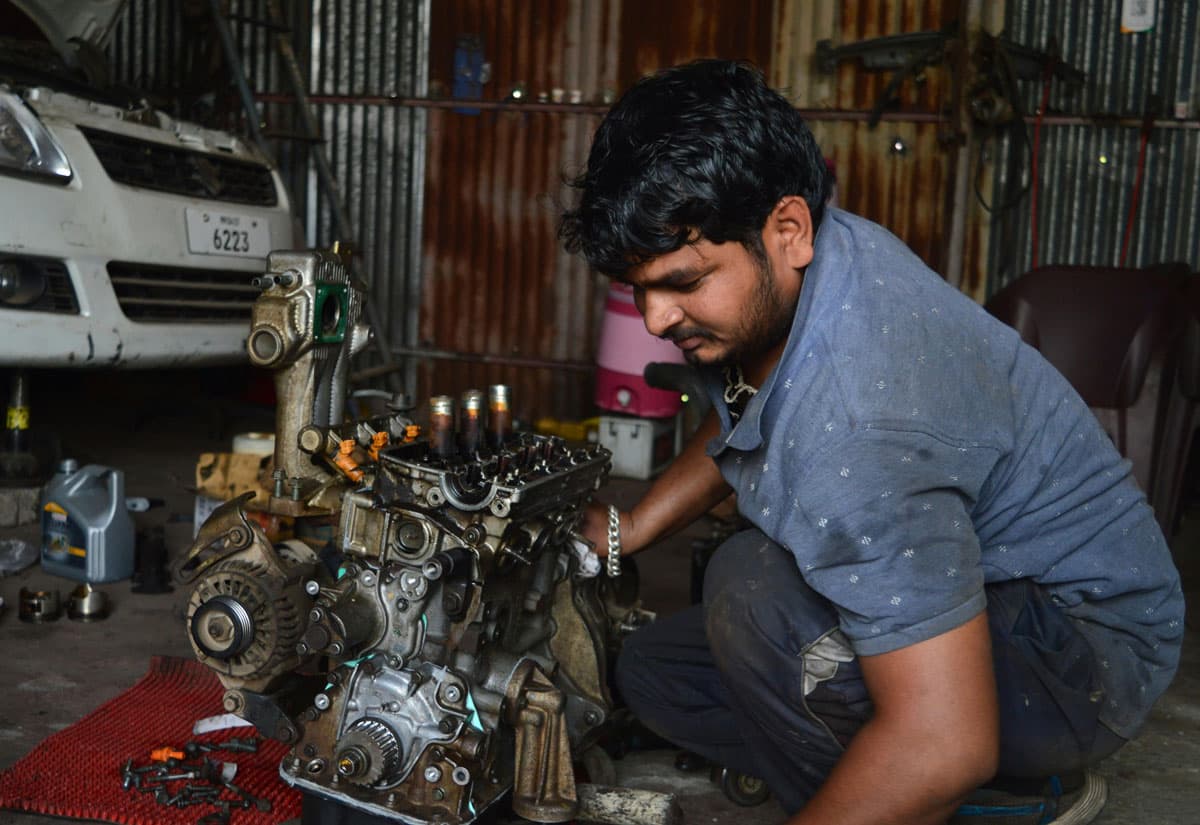
Their contribution is real, but often invisible. On the other hand, the benefits they receive like schemes, subsidies, and ration are visible. So the brain does something efficient, it compares what it sees with what it doesn’t and reaches a conclusion.
3. They’re aggressive
| Place | Muslim Pop. | Behaviour |
|---|---|---|
| Kerala | ~27% | Low crime, high education |
| Hyderabad | ~40% (metro) | Stable mixed neighborhoods |
| Mumbai | Large minority | High economic integration |
| UP ghettos | High | Poor civic outcomes |
The same religion → very different outcomes.
If religion alone explained behaviour, outcomes would look similar everywhere. Multiple international studies (including work referenced by the Pew Research Center) show that radicalisation increases when these factors overlap:
- Poverty
- Segregation / Ghettoisation
- Political marginalisation
- Persistent humiliation or profiling
- Lack of trust in institutions
These conditions can radicalise any group, regardless of religion.
Another small misreading: What can be the reason behind an area with poor sanitation and overcrowding? One explanation is, lack of civic sense. Another explanation, infrastructure failure. Which explanation gets picked often depends on who lives there.
4. They’re not loyal
Loyalty, in a modern nation, is fairly straightforward:
- Follow the law
- Participate in civic life
- Contribute to society
Political participation shows civic commitment. Indian Muslims vote at equal or higher turnout than national averages in many elections, contest elections across parties and ideologies, and participate in protests, movements, and civil discourse. A community that participates in democracy is invested in the nation, not detached from it.
Muslims have served in India’s armed forces since independence and before. They have:
- Fought in all major wars
- Served in police, paramilitary forces, intelligence, and peacekeeping missions
- Received gallantry awards
There is no evidence of mass desertion, refusal to serve, or religious defiance within Indian security forces. So where exactly does this doubt come from?
Possibly from identity confusion
In my opinion, the confusion often arises from the concept of Ummah. It is an Arabic word meaning Muslim identity, nation, religious community, or the concept of a commonwealth of the Muslim believers. The idea that Muslims are loyal to a global religious community (Ummah) over India assumes exclusive identities. In reality, identity is layered. Simultaneously you can be:
- Tamil and Indian
- Hindu and Indian
- Muslim and Indian
Religious practice—prayer, fasting, pilgrimage—has no legal or civic bearing on national loyalty. A Sikh observing kesh or a Hindu performing rituals is not seen as disloyal; the same logic applies to Muslims. No study shows Indian Muslims placing foreign religious authority above Indian law. Symbolic religious unity does not override legal citizenship.
5. They don’t want to modernize
Findings from the Sachar Committee and NFHS show that Muslim educational outcomes closely track:
- Income
- Access
- Infrastructure
Where these improve, outcomes improve. Muslims with similar income and urban access as other groups show comparable school enrollment and retention. There is no evidence of cultural resistance to schooling.
If a school is far, unsafe, or expensive, and the household needs income. Is dropping out a cultural choice? Or a simple trade-off?
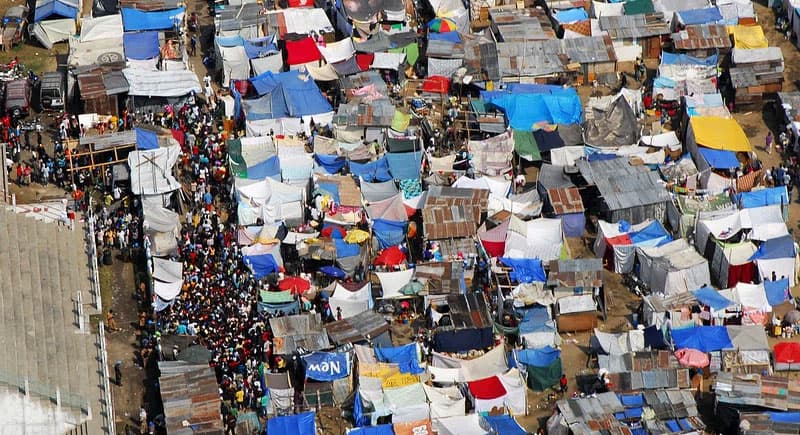
Urban studies show that Muslims are often pushed into religious ghettos due to housing discrimination, denied rentals or property in mixed localities, and concentrated in low-infrastructure zones. Once segregated schools are poorer, public transport is weaker and job networks shrink. This creates social isolation, which is later misread as refusal to integrate.
Entrepreneurship and informal work are survival strategies, not a rejection of modernity. If Muslims “refused to modernize,” they would not run small businesses, adapt to urban markets, and participate in digital and service economies. Modernization is happening but without institutional support.
To be fair, I’ve probably believed some of these things myself at some point. Which makes this slightly uncomfortable to write.
At this point, the data starts to say one thing. But the mind seems to keep saying another. So what’s really happening? These myths don’t seem to arise from ignorance alone. They appear to follow certain patterns.
Let's see the psychological pattern
-
Lack of proximity creates caricatures: The less you interact with a group, the easier it is to define them. In the absence of proximity, media narratives replace lived experience, stereotypes replace nuance, and rare events come to define an entire community.
-
Groups simplify what individuals complicate (Tribal Wiring): The human brain naturally categorizes the world into "us" and "them." Religion becomes an easy boundary because it is visible, emotional, inherited, and non-negotiable. Once someone is labeled "them," their actions are generalized, while the in-group's actions are individualized. A Muslim criminal becomes "Muslims are violent." A Hindu criminal becomes "a bad individual." This is known as the group attribution error.
-
Visibility bias: Poverty is mistaken for culture. Overcrowded neighbourhoods, poor sanitation, and informal housing are often read as cultural traits rather than outcomes of neglect. Humans are poor at separating structural conditions from personal choice. Middle-class Muslims remain largely invisible, while poor Muslims are hyper-visible, turning poverty into identity.
-
Scapegoating governance failures: It is easier to blame a community than to confront failures in governance, urban planning, employment, and public services. Religion often becomes a convenient shortcut explanation. Psychologically, blame tends to flow toward groups with the least power to respond.
-
Moral superiority as psychological comfort. Every religion, caste, and class has its share of corruption and dysfunction. Yet believing, they are backward and we are more civilized, provides moral reassurance. It allows people to feel modern, patriotic, and righteous without examining deeper systemic failures. This is not always hatred; it is often self-soothing.
And somewhere in all this, politics finds an opportunity
In today’s society, religion has become increasingly powerful, shaping electoral outcomes through its emotional impact. Instead of anchoring public debate around long-term nation-building, political discourse often revolves around identity, symbolism, and agendas that offer immediate emotional gratification. This may be effective in the short term, but it is also a reflection of collective short-sightedness.
Try this experiment: Listen to everyday conversations. Notice what gets discussed: identity, “us vs them”, perceived threats. Now notice what doesn’t: pollution, education quality, long-term economic planning. It’s not that those issues don’t matter. They just don’t feel as urgent.
Maybe this isn’t about who is right. Maybe it’s about something simpler.
How much of what we believe comes from what we’ve actually seen? And how much comes from things we’ve heard so often that they started to feel like experience.
If tomorrow you spent a week inside a Muslim household, sharing meals, sitting through ordinary conversations, noticing small details. Would your views stay exactly the same? Or would something… quietly shift? And if it does shift then, what were those views made of in the first place? Or were they never really yours to begin with?

Written by
Piyush Tyagi