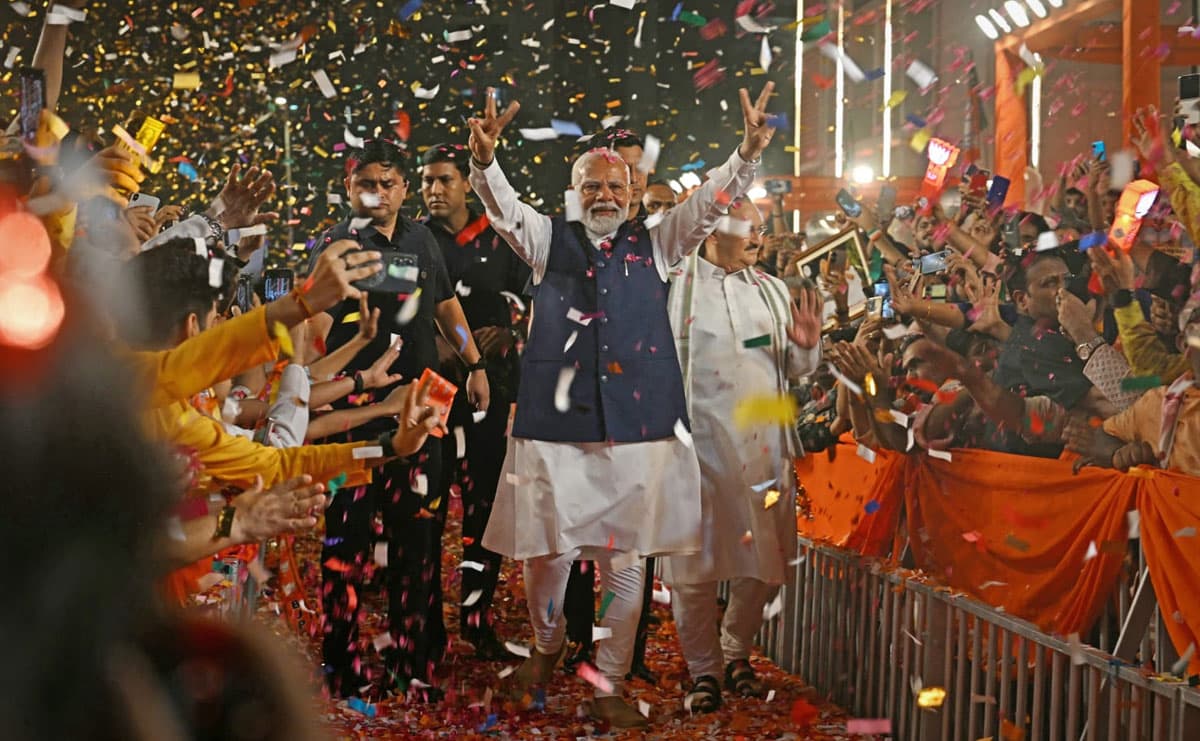
In India, the majority votes but doesn’t always decide the outcome.
India, the world’s largest democracy, conducts elections on a scale unmatched anywhere else. The 2024 General Elections saw a voter turnout of 65.79%, involving over 96 crore eligible voters. Some candidates won by just 181 votes, others by 6,00,000+ votes. On paper, it feels massive, impressive, almost perfect. But then you look a little closer and numbers start behaving strangely.
In the 1999 elections, something interesting happened. Congress got 10.3 crore, while BJP received 8.65 crore votes. Who do you think formed the government?
BJP. Not because of a glitch or an exception. This is how Indian democracy works.
The Current Voting System: FPTP
To understand first past the post method, let's shrink India into a small society of 100 people. We have candidates to choose from (R, C, L). When voting happens, R, C, and L receive 45, 35, and 20 votes, respectively. In the FPTP system, candidate R wins the election even though 55 voters didn’t choose R. FPTP is straightforward, and it feels fair. Until you phrase it like that.
Disproportional Representation: In the 2019 General Elections, the BJP secured 37.4% vote share but gained 56% of the seats in the Lok Sabha. Conversely, the Bahujan Samaj Party (BSP), with over 4% of the vote share, failed to win a single seat.
Wasted Votes: A majority of votes often do not contribute to electing a representative. For instance, in Uttar Pradesh during the 2017 Assembly Elections, over 50% of the votes were cast for losing candidates, effectively sidelining their voices.
Vote Splitting: In Tamil Nadu, smaller parties like MDMK and PMK often struggle to gain representation due to vote splitting, despite having a significant voter base.
Tactical Voting: Voters often choose candidates they perceive as most likely to win rather than their preferred candidates, compromising genuine representation.
Marginalized Voices: Minorities and smaller communities often find their voices underrepresented. They are heard, but not counted.
So what can be the alternative?
Other Method: Ranked-Choice Voting
Let’s go back to the same example where 100 people vote for R, C, and L. But this time, voters rank their choices.
| Voter | Pref 1 | Pref 2 | Pref 3 |
|---|---|---|---|
| 1 | A | B | C |
| 2 | B | A | C |
| .. | C | B | A |
Now, when counting happens, if no candidate wins a majority, the candidate with the fewest votes is eliminated. Voters who selected this candidate as their first choice will have their votes transferred to their next preferred candidate. This elimination and redistribution process continues until one candidate secures a majority of votes.
Sounds perfect, right? But this system too has its demerits:
Complexity and Confusion: Voters must rank multiple candidates, which can lead to confusion about how to fill out their ballots properly.
Ballot Exhaustion: If a voter’s top choices get eliminated early, their vote may not count in later rounds. Eventually, this leads to wasted votes.
Lack of Transparency: The multi-round counting process in RCV often relies on computerized systems. In which case, you trust the process more than you understand it.
Unfair Outcomes: This is really interesting. Let's look at two elections.
Round one gives no clear majority. Thus, Left gets eliminated, and it's obvious to think most Left voters will rank Center as their second choice
Center wins 55 votes. So even though Right was leading, Center ends up governing.
Let's assume that in this election the Right went too harsh in their policies. So much so that 7% of their votes shifted to the Left. Now, the Center gets eliminated, and it's rational to think that voters will split 50-50 in their second choice.
Result? Right wins 53 votes. Even though public opinion was against the Right, still Right ended up governing.
RCV is unpredictable and sometimes perceived as unfair. A candidate with fewer first-choice votes can still end up winning due to vote transfers from eliminated candidates.
So What Actually Works??
There are more systems. Each one sounds like the solution, until you look closely.
-
Two-Round Runoff: If no candidate receives a majority in the first round, a second round is held between the top two candidates. More effective than FPTP as it ensures that the final winner has majority support, but it can still lead to wasted votes in the first round.
-
Approval Voting: Voters can approve as many candidates as they like; the candidate with the most approvals wins. Fairly effective at capturing broad support, but it can lead to situations where a candidate wins without being a true favorite.
-
Condorcet Method: This method elects the candidate who would win a head-to-head matchup against each of the other candidates. It is the most effective method in reflecting true voter preferences. Practically conducting large-scale elections by this method is a nightmare.
-
Borda Count: Voters rank candidates, and points are assigned based on their rankings. The candidate with the highest total points wins. It is considered moderately effective, as it can be influenced by strategic voting. And suddenly, math becomes politics again.
Since there are so many methods for elections with their fair share of advantages and disadvantages, is there any method that is 100% bulletproof?
According to Kenneth Arrow, no is the answer, and he won the Nobel Prize for his impossibility theorem.
He says no method can meet all three at once:
- Completely fair
- Fully representative
- Logically consistent
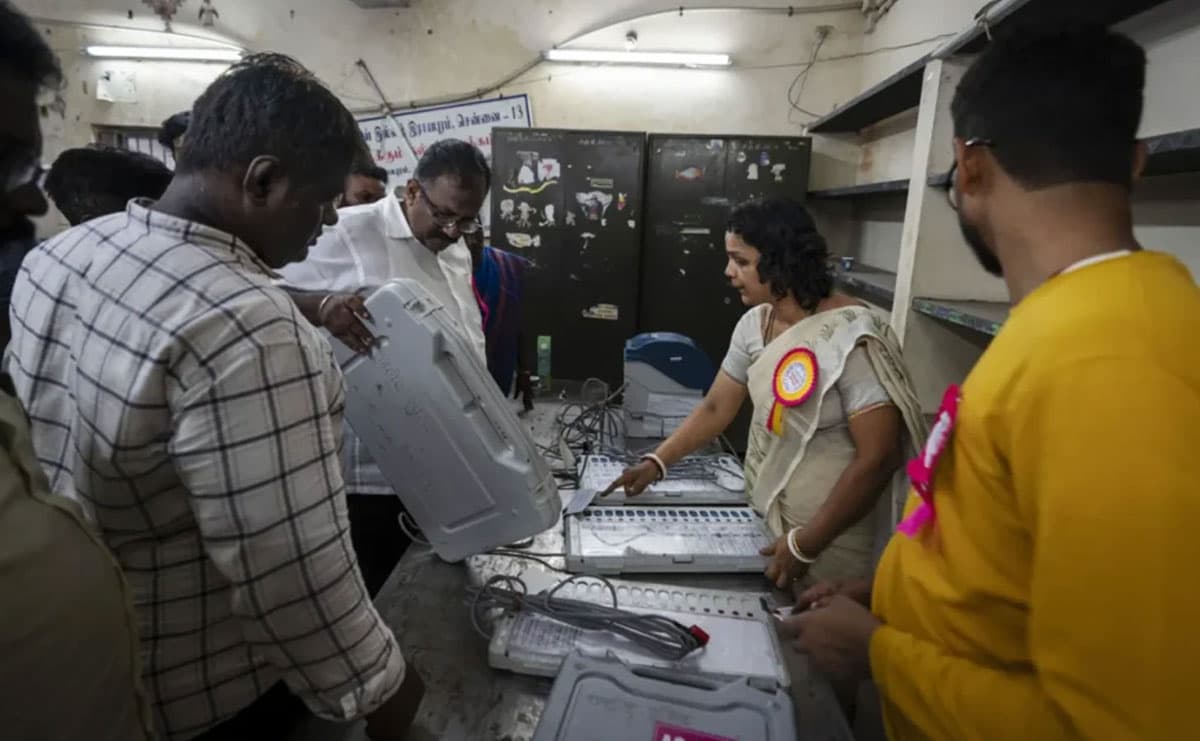
India is the world’s largest democracy. Yet since 1951, no party has crossed 50% vote share. Not even when Rajiv Gandhi swept 404 seats in 1984. Which means, technically, most voters didn’t choose the government they got.
Then What Are We Even Doing?
India uses FPTP because it’s simple, scalable, and fast. It produces clear winners, stable governments, and quick results. And maybe that’s the trade-off. Because fixing representation would mean complicating things:
- Requiring actual majority (>50%)
- Letting votes carry forward instead of getting wasted
- Allowing smaller groups to exist politically, not just statistically
But that would slow things down.
Let’s just assume India adopts a hybrid method, combining FPTP for its simplicity at local levels and RCV for state and national elections. This balance might offer a pragmatic path toward a more representative democracy in India.
Sounds intelligent? But remember No method is the 100%.

Written by
Piyush Tyagi